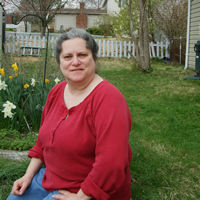
Blessings darlings!
I'm glad you're here.
Now, go read THIS, because it's the most useful magical advice you'll get today, this week, maybe this year. http://candlesmokechapel.com/2013/06/29/that-candle-is-not-magic/
Frondly, Fern
Showing posts with label herbs. Show all posts
Showing posts with label herbs. Show all posts
Friday, August 16, 2013


Thursday, May 23, 2013
Charmed, I'm sure.
Blessings Darlings!
A recent question, not asked to me exactly, but posted online: "This is going to sound silly, but I love to have all my pieces with me, particularly the ones that function as jewelry, so my question is how do you pick which to wear? My stones help me regulate my emotions and I can't forsee [sic] what I'll need thoughtout [sic] the day. Any tips?"
Amulets probably go back almost as far as jewelry does. Maybe farther, but my observations of children's brain development tells me that 'pretty' comes before 'symbolic' in their use of items, so that may be true of general human development as well. And most humans being hoarders, the idea of 'the more the merrier' probably goes way back, too. So humans have had to find ways to handle carrying around lots of amulets at once.
So humans made special necklaces and bracelets and sachets.
The idea of bracelets being used to hold special items is still common today. They are called 'charm bracelets' - remember them? Now the charms tend to be symbols of life events, like a charm representing each child born, or getting married. But charging and then adding a wire-wrapped crystal or stone or tooth or whatever for a magical purpose is a natural way for a magic-user to move a charm bracelet back to, well, a bracelet of CHARMS. Of course, a this can be worn either as a wrist bracelet or an ankle bracelet and serve the same purpose.
Creating your own necklace as a multi-purpose amulet is also a great option. From delicate looking ones, using beads from a craft store (different sizes/colors of beads charge for different purposes) to the more old-school rustic ones, using, say, animal teeth with holes drilled into them for protection, along with (again) wire-wrapped stones and crystals (hard to drill holes in them yourself!) or plant seeds you've carefully made holes in and lacquered, or whatever materials, each type charged for its purpose. Strung on nylon, leather, cotton, or your own hair.
Even using charm bracelets and necklaces, you will still have times when you may want to use a sachet. Sachets (which Byron Ballard, writer of "Staubs and Ditchwater" on Appalachian Rootworking assures me is to be pronounced 'sa-chet' here in the Appalachians, not "Sa-shay") are little cloth bags that you fill with 'stuff'. The 'Stuff' can be herbs, roots, bits of stones/clay/crystals, whatever. Sachets tend to be one-purpose items, the way I use them, and somewhat time-limited. After the one, two, or four-week period I keep it with me, I will usually bury the entire bag, to return it to the earth.
Do y'all need me to go into how to magically charge things? My online group reading is making me think that a lot of folks haven't been taught that yet. Please - let me know.
Frondly, Fern
A recent question, not asked to me exactly, but posted online: "This is going to sound silly, but I love to have all my pieces with me, particularly the ones that function as jewelry, so my question is how do you pick which to wear? My stones help me regulate my emotions and I can't forsee [sic] what I'll need thoughtout [sic] the day. Any tips?"
Amulets probably go back almost as far as jewelry does. Maybe farther, but my observations of children's brain development tells me that 'pretty' comes before 'symbolic' in their use of items, so that may be true of general human development as well. And most humans being hoarders, the idea of 'the more the merrier' probably goes way back, too. So humans have had to find ways to handle carrying around lots of amulets at once.
So humans made special necklaces and bracelets and sachets.
The idea of bracelets being used to hold special items is still common today. They are called 'charm bracelets' - remember them? Now the charms tend to be symbols of life events, like a charm representing each child born, or getting married. But charging and then adding a wire-wrapped crystal or stone or tooth or whatever for a magical purpose is a natural way for a magic-user to move a charm bracelet back to, well, a bracelet of CHARMS. Of course, a this can be worn either as a wrist bracelet or an ankle bracelet and serve the same purpose.
Creating your own necklace as a multi-purpose amulet is also a great option. From delicate looking ones, using beads from a craft store (different sizes/colors of beads charge for different purposes) to the more old-school rustic ones, using, say, animal teeth with holes drilled into them for protection, along with (again) wire-wrapped stones and crystals (hard to drill holes in them yourself!) or plant seeds you've carefully made holes in and lacquered, or whatever materials, each type charged for its purpose. Strung on nylon, leather, cotton, or your own hair.
Even using charm bracelets and necklaces, you will still have times when you may want to use a sachet. Sachets (which Byron Ballard, writer of "Staubs and Ditchwater" on Appalachian Rootworking assures me is to be pronounced 'sa-chet' here in the Appalachians, not "Sa-shay") are little cloth bags that you fill with 'stuff'. The 'Stuff' can be herbs, roots, bits of stones/clay/crystals, whatever. Sachets tend to be one-purpose items, the way I use them, and somewhat time-limited. After the one, two, or four-week period I keep it with me, I will usually bury the entire bag, to return it to the earth.
Do y'all need me to go into how to magically charge things? My online group reading is making me think that a lot of folks haven't been taught that yet. Please - let me know.
Frondly, Fern
Monday, April 23, 2012
Wildcrafting: Plantain
Blessings Darlings!
We are finally getting rain here in the northern Blue Ridge Mountains. We were at about half our normal rain for the year, with yesterday and today (today be Sunday) we might get up to 65% of normal. The grass and fields planted in winter wheat are loving it - they were both VERY unhappy about the lack of rain.
The wild greens are loving it, too. We've moved out of dandelion and chickweed seasons (well, I have one patch of chickweed on the north side of the house I will harvest tomorrow, but that's it) and moved into the dock and plantain seasons. Today, out in the cold rain, I harvested a scant quart of plantain. Here are some pictures of it. I have both the narrow and broad leaf varieties in the yard, but I harvest the broad leaf.
Most parts of the plantain plant can be used, either for food or healing. If you have a choice, the best parts for eating are young leaves. The leaves get tough later. And while the seeds are often listed as an item 'Indians ground and used for bread' ... that speaks more for how hungry folks got rather than the taste of the seeds, says a friend who tried doing that.
I'm going to use these as the greens in soup, with canned or dry tomatoes, whole wheat pasta or wheat berries, chickpeas, wild onion, and some asparagus.
What's fresh and tasty in your land base?
Frondly, Fern
We are finally getting rain here in the northern Blue Ridge Mountains. We were at about half our normal rain for the year, with yesterday and today (today be Sunday) we might get up to 65% of normal. The grass and fields planted in winter wheat are loving it - they were both VERY unhappy about the lack of rain.
The wild greens are loving it, too. We've moved out of dandelion and chickweed seasons (well, I have one patch of chickweed on the north side of the house I will harvest tomorrow, but that's it) and moved into the dock and plantain seasons. Today, out in the cold rain, I harvested a scant quart of plantain. Here are some pictures of it. I have both the narrow and broad leaf varieties in the yard, but I harvest the broad leaf.
Most parts of the plantain plant can be used, either for food or healing. If you have a choice, the best parts for eating are young leaves. The leaves get tough later. And while the seeds are often listed as an item 'Indians ground and used for bread' ... that speaks more for how hungry folks got rather than the taste of the seeds, says a friend who tried doing that.
I'm going to use these as the greens in soup, with canned or dry tomatoes, whole wheat pasta or wheat berries, chickpeas, wild onion, and some asparagus.
What's fresh and tasty in your land base?
Frondly, Fern
Friday, March 16, 2012
Herb Garden Plan
Blessings Darlings!
I've sort of decided to put in a raised herb garden in the front yard. However, I suspect the Chubby Hubby is going to tell me to have it elsewhere, because he thinks that flowers and such belong in a front yard and useful stuff in a back 40.
So I'm not really sure WHERE it will go.
OTOH, I've decided that it will probably be made of 8 railroad tie type wooden beams, stacked two deep, held in place by drilling two holes (one at each end) of them and pounding a 12 inch metal stake thru' them into the ground. So the area will be, I dunno 4' by 4' or 5' by 5', whatever length they come in.
The ground within will be lined heavily with newpaper, my usual approach for smothering grass and weeds. Then I'll dump the contents of my 'compost bin' - the 30 gallon garbage can I've put all our kitchen waste in for the past year - on top of that. And in will go my seedlings, as well as any herbs I have to buy since the rosemary seeds, among a few other herbs, haven't sprouted.
I'll need to buy some peppermint, too, to put somewhere where it won't be a problem. It can be VERY invasive, but like many of the herbs its flower attract bees by the bushel and thus help keep bees going strong and help insure that pollinators come visit all my plants. Which is important to the vegetable garden!
How does your garden grow?
Frondly, Fern
I've sort of decided to put in a raised herb garden in the front yard. However, I suspect the Chubby Hubby is going to tell me to have it elsewhere, because he thinks that flowers and such belong in a front yard and useful stuff in a back 40.
So I'm not really sure WHERE it will go.
OTOH, I've decided that it will probably be made of 8 railroad tie type wooden beams, stacked two deep, held in place by drilling two holes (one at each end) of them and pounding a 12 inch metal stake thru' them into the ground. So the area will be, I dunno 4' by 4' or 5' by 5', whatever length they come in.
The ground within will be lined heavily with newpaper, my usual approach for smothering grass and weeds. Then I'll dump the contents of my 'compost bin' - the 30 gallon garbage can I've put all our kitchen waste in for the past year - on top of that. And in will go my seedlings, as well as any herbs I have to buy since the rosemary seeds, among a few other herbs, haven't sprouted.
I'll need to buy some peppermint, too, to put somewhere where it won't be a problem. It can be VERY invasive, but like many of the herbs its flower attract bees by the bushel and thus help keep bees going strong and help insure that pollinators come visit all my plants. Which is important to the vegetable garden!
How does your garden grow?
Frondly, Fern
Thursday, March 8, 2012
WORKING with Plants
Blessings Darlings!
Herb books are GREAT for medicinal properties assigned to herbs. They may give some other associations they have - planets, Gods, chakras, sepherot (and sometimes the books occassionally agree on what those associations are!).
But .... if you want to bond with the Spirit of the Herb/Spice/Resin .... that's a different thing. That takes some extra effort.
Yes, start with the book/internet knowledge. Especially find out if it's safe to take internally, because that's one technique we're going to discuss! Study. Memorize. Learn everything you can about the plant. Grow it if you can, or find it growing wild. If it's safe to take internally, eat or drink some of the plant. See what physical effects the plant has on your body. NOTE - IF THIS IS A KNOWN PSYCHOACTIVE PLANT, DO NOT NOT NOT DO THIS, ESPECIALLY AT THIS STAGE. DO THIS, FOR EXAMPLE, WITH OREGANO OR HOT PEPPERS, NOT WITH DATURA.
Oh, and you might ingest the plant in an orderly fashion, if possible. Leaves, seeds, bark, root all might have very different properties. Again - book knowledge first. The only part of, say, Poke weed that won't be toxic will be young shoots.
Make an offering to the spirit of the plant. Yes, it's best if you can leave it at the plant, and bonus points for finding it growing wild, but if it doesn't grow in your area that's okay. Explain your intention to the Spirit of the Plant, and that you're giving the offering as a token of your respect.
From here, move on to building up a good visualization of the plant. This would take me a week, but you might well be better at visualization than I am! I start with pictures on Google, then work on making them 'come alive'. You could make a sigil of the plant name, if you are inclined that way. I'm not a sigil person .... yet. Maybe I'll get there this life.
Finally, head into trance, hold that visualization or sigil, introduce yourself to the plant, and get to know it. What offerings does it like? What wisdom can it share with you? What plants/animals/spirits does it play nice with .... and which does it NOT play nice with?
Record this UPG (unverified Personal Gnossis) you get from the plant in your BOSL. Remember to give the plant an occassional offering, and an occassional visit - after working with it more you're likely to have more, not less, questions for it!
Frondly, Fern
Herb books are GREAT for medicinal properties assigned to herbs. They may give some other associations they have - planets, Gods, chakras, sepherot (and sometimes the books occassionally agree on what those associations are!).
But .... if you want to bond with the Spirit of the Herb/Spice/Resin .... that's a different thing. That takes some extra effort.
Yes, start with the book/internet knowledge. Especially find out if it's safe to take internally, because that's one technique we're going to discuss! Study. Memorize. Learn everything you can about the plant. Grow it if you can, or find it growing wild. If it's safe to take internally, eat or drink some of the plant. See what physical effects the plant has on your body. NOTE - IF THIS IS A KNOWN PSYCHOACTIVE PLANT, DO NOT NOT NOT DO THIS, ESPECIALLY AT THIS STAGE. DO THIS, FOR EXAMPLE, WITH OREGANO OR HOT PEPPERS, NOT WITH DATURA.
Oh, and you might ingest the plant in an orderly fashion, if possible. Leaves, seeds, bark, root all might have very different properties. Again - book knowledge first. The only part of, say, Poke weed that won't be toxic will be young shoots.
Make an offering to the spirit of the plant. Yes, it's best if you can leave it at the plant, and bonus points for finding it growing wild, but if it doesn't grow in your area that's okay. Explain your intention to the Spirit of the Plant, and that you're giving the offering as a token of your respect.
From here, move on to building up a good visualization of the plant. This would take me a week, but you might well be better at visualization than I am! I start with pictures on Google, then work on making them 'come alive'. You could make a sigil of the plant name, if you are inclined that way. I'm not a sigil person .... yet. Maybe I'll get there this life.
Finally, head into trance, hold that visualization or sigil, introduce yourself to the plant, and get to know it. What offerings does it like? What wisdom can it share with you? What plants/animals/spirits does it play nice with .... and which does it NOT play nice with?
Record this UPG (unverified Personal Gnossis) you get from the plant in your BOSL. Remember to give the plant an occassional offering, and an occassional visit - after working with it more you're likely to have more, not less, questions for it!
Frondly, Fern
Wednesday, January 26, 2011
Inching to Independence
Blessings, Darlings!
The extremes in weather this winter have me looking at greater food independence again.
As many of you know, severe freezes hit Florida, making the price of winter strawberries soar. Which I don't really care about, to tell the truth - I prefer local ones in season. Yes, orange juice for the Chubby Hubby has risen a bit in price, but not a lot.
What IS having an effect on me is the rise in price of my staple veggies. Cabbages were apparently hit hard by the freezes, and have started rising in price. We eat a LOT of cabbage here - it's usually inexpensive and very nutrient-dense. And carrots have risen in price rather a lot as well, with a 5 pound bag now going for almost $4 instead of the usual $2.00 - $2.50.
As a result, I've really kicked up my sprouting seeds for current eating. I'm prouting lots of mung beans for stir fries one to two times a week, and wheat for extending salads. I've written about both of those before.
What I'm also doing in kicking up the amount of veggies I've started for 'garden' purposes, seeds I'm starting in actual soil. Every week I'm starting 6 onions (from a bag of pearl onions I bought at the grocer, since the garden centers don't have onion sets yet) to use for green onions/scallions. I've got lettuce started which is sprouted. Seeds have been started for turnips, for red onions, for parsley, for spinach.
In the next few days I'll start my own cabbages, more herbs, etc.
All high-nutrition foods, helping me gain independence in veggies.
Not in calories, not in fats, not in proteins, not in carbohydrates.
But I have to start SOMEWHERE, and it is bloody cold JANUARY.
Frondly, Fern
The extremes in weather this winter have me looking at greater food independence again.
As many of you know, severe freezes hit Florida, making the price of winter strawberries soar. Which I don't really care about, to tell the truth - I prefer local ones in season. Yes, orange juice for the Chubby Hubby has risen a bit in price, but not a lot.
What IS having an effect on me is the rise in price of my staple veggies. Cabbages were apparently hit hard by the freezes, and have started rising in price. We eat a LOT of cabbage here - it's usually inexpensive and very nutrient-dense. And carrots have risen in price rather a lot as well, with a 5 pound bag now going for almost $4 instead of the usual $2.00 - $2.50.
As a result, I've really kicked up my sprouting seeds for current eating. I'm prouting lots of mung beans for stir fries one to two times a week, and wheat for extending salads. I've written about both of those before.
What I'm also doing in kicking up the amount of veggies I've started for 'garden' purposes, seeds I'm starting in actual soil. Every week I'm starting 6 onions (from a bag of pearl onions I bought at the grocer, since the garden centers don't have onion sets yet) to use for green onions/scallions. I've got lettuce started which is sprouted. Seeds have been started for turnips, for red onions, for parsley, for spinach.
In the next few days I'll start my own cabbages, more herbs, etc.
All high-nutrition foods, helping me gain independence in veggies.
Not in calories, not in fats, not in proteins, not in carbohydrates.
But I have to start SOMEWHERE, and it is bloody cold JANUARY.
Frondly, Fern
Subscribe to:
Posts (Atom)